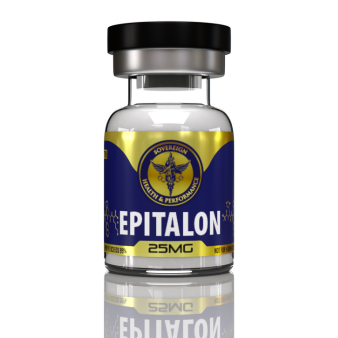
Epitalon (also known as Epithalon or Epithalamin) is a synthetic tetrapeptide, meaning it is a short chain composed of four amino acids — alanine, glutamic acid, aspartic acid, and glycine (Ala-Glu-Asp-Gly). It is modeled after the natural peptide complex Epithalamin, which was originally isolated from the pineal gland of cattle.
The pineal gland is a small structure deep within the brain that regulates circadian rhythms — the 24-hour cycles governing sleep, hormone release, metabolism, and energy balance. As we age, the pineal gland’s function declines, leading to disrupted melatonin production and other downstream effects.
Epitalon is being studied for its potential to restore pineal function, support healthy aging, and protect against age-related decline. It is categorized as a geroprotector — a compound under investigation for its ability to slow the biological processes of aging.
Most foundational research has come from Russian gerontology institutes, where Epitalon has been studied since the late 20th century for its ability to:
Its research spans both molecular mechanisms (like DNA repair and gene regulation) and systemic physiology (including sleep, metabolism, and recovery).
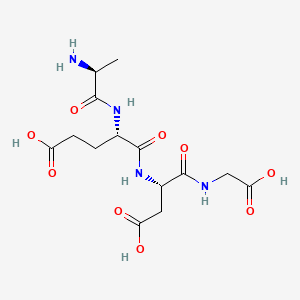
Sequence: Ala-Glu-Asp-Gly
Molecular Formula: C₁₄H₂₂N₄O₉
Molecular Weight: 390.349 g/mol
PubChem CID: 219042
CAS Number: 307297-39-8
Source: PubChem
Epitalon has been shown in cell culture and animal models to activate telomerase, an enzyme that maintains and elongates telomeres — the DNA-protective caps at the ends of chromosomes that naturally shorten with each cell division. Shortened telomeres trigger cellular senescence (loss of growth and repair capacity).
By activating telomerase, Epitalon may delay cellular aging and extend the replicative lifespan of normal cells.
Why this matters: Preserving telomere length is one of the key goals in longevity science, as telomere erosion contributes to tissue degeneration and biological aging.
Reference:
The pineal gland produces melatonin, the hormone that governs the body’s internal clock. As melatonin output decreases with age, circadian rhythms and sleep quality deteriorate.
Experimental evidence indicates that Epitalon can restore melatonin synthesis and normalize daily secretion cycles, thereby improving both sleep and overall hormonal balance in aging subjects.
Why this matters: Proper circadian rhythm regulation influences sleep quality, mood, metabolism, and immune health — all of which deteriorate with age.
Reference:
In aging models, Epitalon has been reported to enhance immune cell regeneration and reactivate thymic function, leading to improved T-cell activity and systemic immune balance.
This modulation may help offset immunosenescence — the gradual weakening of immune defenses that occurs with age.
Why this matters: A balanced immune system defends against infection while preventing chronic inflammation, one of the leading drivers of aging.
Reference:
Apoptosis is the natural, programmed death of cells that are damaged or no longer needed. Epitalon has been studied for its ability to modulate apoptosis, support DNA repair mechanisms, and regulate gene expression linked to cellular quality control.
By influencing these pathways, Epitalon may help cells repair themselves instead of prematurely self-destructing, supporting longevity at the cellular level.
Reference:
Epitalon has been evaluated for its protective effects on retinal cells and its ability to reduce oxidative damage in the eye — both major contributors to age-related vision decline.
In experimental models, it reduced markers of oxidative stress and preserved the structure of photoreceptor cells, which are essential for clear vision.
Reference:
Epitalon demonstrates antioxidant properties, reducing lipid peroxidation and neutralizing reactive oxygen species (ROS) in tissues.
This helps protect cell membranes from oxidative damage and supports the balance between free radical generation and antioxidant defense.
Why this matters: Chronic oxidative stress accelerates tissue aging and inflammation. Compounds that reduce oxidative damage may protect organ integrity and function.
Reference:
Mitochondria are the energy-producing organelles within cells. Research suggests that Epitalon can help preserve mitochondrial function and redox balance (the balance between oxidation and reduction reactions critical for metabolism).
Improved mitochondrial efficiency translates into better cellular energy output, which may contribute to physical endurance and metabolic stability in aging organisms.
Reference:
Preclinical data suggest Epitalon can improve arterial elasticity, blood pressure control, and vascular integrity through its antioxidant and circadian-normalizing actions.
These findings indicate possible benefits in reducing vascular stiffness and supporting healthy blood flow during aging.
Reference:
Studies have examined how Epitalon influences the hypothalamic–pituitary–gonadal axis, the hormonal system that controls reproduction.
Results suggest it may help normalize gonadal hormone feedback loops and reduce age-related fertility decline in experimental models.
Reference:
Epitalon has also been examined for its neuroprotective properties in aging and neurodegeneration models.
By reducing oxidative stress and improving gene regulation, Epitalon may help protect neurons, preserve synaptic integrity, and delay cognitive decline associated with aging.
Reference:
| CAS | 307297-39-8 |
|---|---|
| MG | 25 |
| Brand | Sovereign Health and Performance |