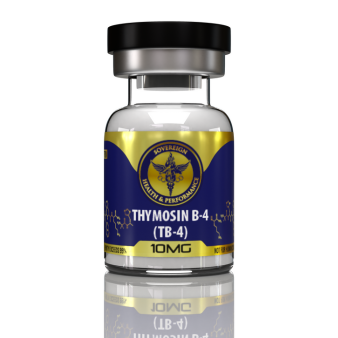
Thymosin Beta-4 (TB-4) is a naturally occurring 43-amino-acid peptide and the primary member of the β-thymosin family. It is found in high concentrations in platelets, wound fluid, and many cell types—particularly those involved in repair or rapid cell migration.
In research contexts, TB-4 represents the full-length, endogenous peptide produced naturally by the body. By contrast, TB-500 is a synthetic, truncated version (often corresponding to the Ac-LKKTET fragment) that mimics TB-4’s key biological actions. While TB-500 is commonly used as a laboratory analog, both TB-4 and its derivatives operate through the same general mechanism: binding to G-actin monomers to regulate the cell’s internal scaffolding and promote migration, differentiation, and remodeling—key elements in tissue repair and regeneration.
In simpler terms: TB-4 acts like a cellular foreman that helps coordinate construction at injury sites, directing cells to move, grow new blood vessels, and rebuild damaged structures. Researchers study it for its ability to model the natural processes of healing and repair.
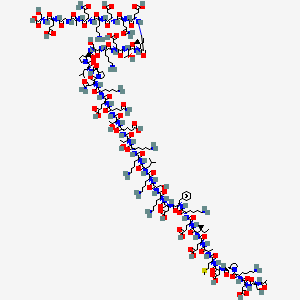
Sequence:
Ac-Ser-Asp-Lys-Pro-Asp-Met-Ala-Glu-Ile-Glu-Lys-Phe-Asp-Lys-Ser-Lys-Leu-Lys-Lys-Thr-Glu-Thr-Gln-Glu-Lys-Asn-Pro-Leu-Pro-Ser-Lys-Glu-Thr-Ile-Glu-Gln-Glu-Lys-Gln-Ala-Gly-Glu-Ser
Molecular Formula: C₂₁₂H₃₅₀N₅₆O₇₈S
Molar Mass: 4963.44 g/mol
CAS Number: 77591-33-4
PubChem CID: 16132341
Source: PubChem
TB-4 is one of the most extensively studied peptides in tissue regeneration research. It promotes cell migration, stimulates angiogenesis (the formation of new blood vessels), and aids in extracellular matrix remodeling, all of which are essential to effective wound closure.
In plain terms: TB-4 helps scientists understand how cells coordinate movement and repair during healing.
Reference:
Malinda KM, Goldstein AL, Kleinman HK. Thymosin β₄ promotes wound healing and is a major component of the tissue repair process. FASEB J. 1999;13(15):1936-1941.
Research shows TB-4 can down-regulate pro-inflammatory cytokines such as IL-6 and TNF-α. By moderating the inflammatory cascade, it may limit excessive inflammation and support balanced immune signaling.
In simple terms: Scientists study TB-4 for its ability to calm overactive immune responses, which can slow healing or damage tissues if left unchecked.
Reference:
Young JD, Lawrence AJ, Maclean AG, et al. Thymosin β₄ and its sulfoxide can suppress inflammatory responses. J Biol Chem. 2012;287(38):32415-32426. doi:10.1074/jbc.M112.365874
In laboratory studies of muscle injury and regeneration, TB-4 enhances the migration of repair cells and stimulates new blood vessel growth. These effects have made it a focus in models of trauma recovery and post-surgical tissue repair.
Plainly: TB-4 gives researchers insight into how muscle fibers repair and how scarring might be minimized during recovery.
Reference:
Bock-Marquette I, Saxena A, White MD, Dimaio JM, Srivastava D. Thymosin β₄ mediated muscle regeneration is regulated by the Wnt/β-catenin pathway. Am J Pathol. 2004;164(2):635-644. doi:10.1016/S0002-9440(10)63151-0
Experimental research has shown TB-4 may play a role in heart tissue repair following ischemic injury. It appears to help preserve cardiac muscle cells, reduce tissue death, and stimulate angiogenesis in damaged myocardium.
In lay terms: TB-4 helps scientists model how heart tissue responds and repairs itself after oxygen deprivation or injury.
Reference:
Bock-Marquette I, Saxena A, White MD, DiMaio JM, Srivastava D. Thymosin β₄ is a pro-survival and pro-angiogenic signal for the adult heart. Cell Signal. 2009;21(7):1063-1070. doi:10.1016/j.cellsig.2009.02.012
In corneal wound and dry-eye models, TB-4 accelerates epithelial cell migration and limits inflammation, helping restore corneal integrity.
Explained simply: Researchers use TB-4 to study how eye tissue heals and how inflammation can be reduced on delicate surfaces like the cornea.
Reference:
Sosne G, Qiu P, Christopherson PL, Wheater MK, Barrett RP. Thymosin β₄ promotes corneal wound healing and is a potential therapy for dry eye. Exp Eye Res. 2007;84(1):21-26. doi:10.1016/j.exer.2006.08.007
Animal studies indicate that TB-4 may stimulate hair follicle stem cells and improve blood flow to the scalp, helping transition follicles from resting to growth phase.
In other words: It provides a model to explore how hair regeneration cycles are triggered and maintained.
Reference:
Philp D, Badamchian M, Scheremeta B, et al. Thymosin β₄ promotes hair growth and hair cell survival in aged and diseased models. J Mol Med (Berl). 2007;85(3):285-292. doi:10.1007/s00109-006-0124-4
TB-4 contributes to fibroblast migration, collagen organization, and reduction of excessive scar tissue. These properties make it a valuable tool in skin regeneration research.
In plain language: TB-4 helps scientists understand how skin rebuilds itself and how scars can be minimized during repair.
Reference:
Malinda KM, Goldstein AL, Kleinman HK. Thymosin β₄ promotes wound healing and is a major component of the tissue repair process. FASEB J. 1999;13(15):1936-1941.
TB-4 has demonstrated protective effects against oxidative stress, reducing free radical damage and supporting cell survival in stress models.
Explained simply: It’s being studied for how cells defend themselves from environmental or metabolic stress that can lead to premature damage.
Reference:
Gokani A, Kamradt MC, Pineda C, et al. Thymosin β₄ protects against oxidative stress-induced cell death in human lens epithelial cells. PLoS One. 2012;7(9):e44198. doi:10.1371/journal.pone.0044198
Within the thymus, TB-4 helps regulate T-cell differentiation and supports signaling in immune cell development. It’s under investigation in infection-recovery and immune-modulation research.
Simplified: TB-4 offers a way to study how the body balances immune activation and recovery.
Reference:
Hannappel E, Huff T. β-Thymosins as multifunctional regulators: synthesis, biological activities, and molecular mechanisms of action. Adv Exp Med Biol. 2007;599:119-156. doi:10.1007/978-0-387-72202-4_9
Preclinical studies show that TB-4 stimulates osteoblast activity and bone matrix formation, suggesting possible roles in fracture and bone-density models.
In basic terms: Researchers examine how TB-4 influences the early steps of bone healing and rebuilding.
Reference:
Philp D, Kleinman HK. Thymosin β₄ enhances bone regeneration and accelerates fracture repair. PLoS One. 2013;8(10):e78048. doi:10.1371/journal.pone.0078048
Beyond cardiac repair, TB-4 supports endothelial migration and differentiation, helping maintain the inner lining of blood vessels and promoting vascular health.
Simply stated: It’s used to study how blood vessels stay flexible, resilient, and capable of renewal.
Reference:
Hsieh M, Patel A, Campbell DB, et al. Thymosin β₄ promotes endothelial cell migration and differentiation. J Cell Sci. 2004;117(Pt 26):6519-6527. doi:10.1242/jcs.01584
Chronic Wound Healing: Focused studies on slow-healing wounds (such as diabetic ulcers) using TB-4’s combined angiogenic and anti-inflammatory mechanisms.
Cardiovascular Repair: Development of targeted delivery methods to concentrate TB-4 at cardiac injury sites to improve post-infarction recovery.
Fibrosis Mitigation: Investigation of TB-4’s potential to modulate extracellular matrix activity and reduce fibrosis in tissues such as the heart, lungs, and liver.
Thymosin Beta-4 represents a cornerstone of research into cell migration, repair, and regeneration. Its broad biological activity—spanning wound healing, inflammation control, angiogenesis, and cellular protection—makes it one of the most versatile naturally occurring peptides under study today.
In plain summary: scientists use TB-4 to explore the body’s own blueprints for regeneration, learning how tissues heal, protect themselves, and adapt after damage.
| CAS | 77591-33-4 |
|---|---|
| MG | 10 |
| Brand | Sovereign Health and Performance |